
Before Stand-Up, the Agents Have Already Delivered Half a Day’s Work
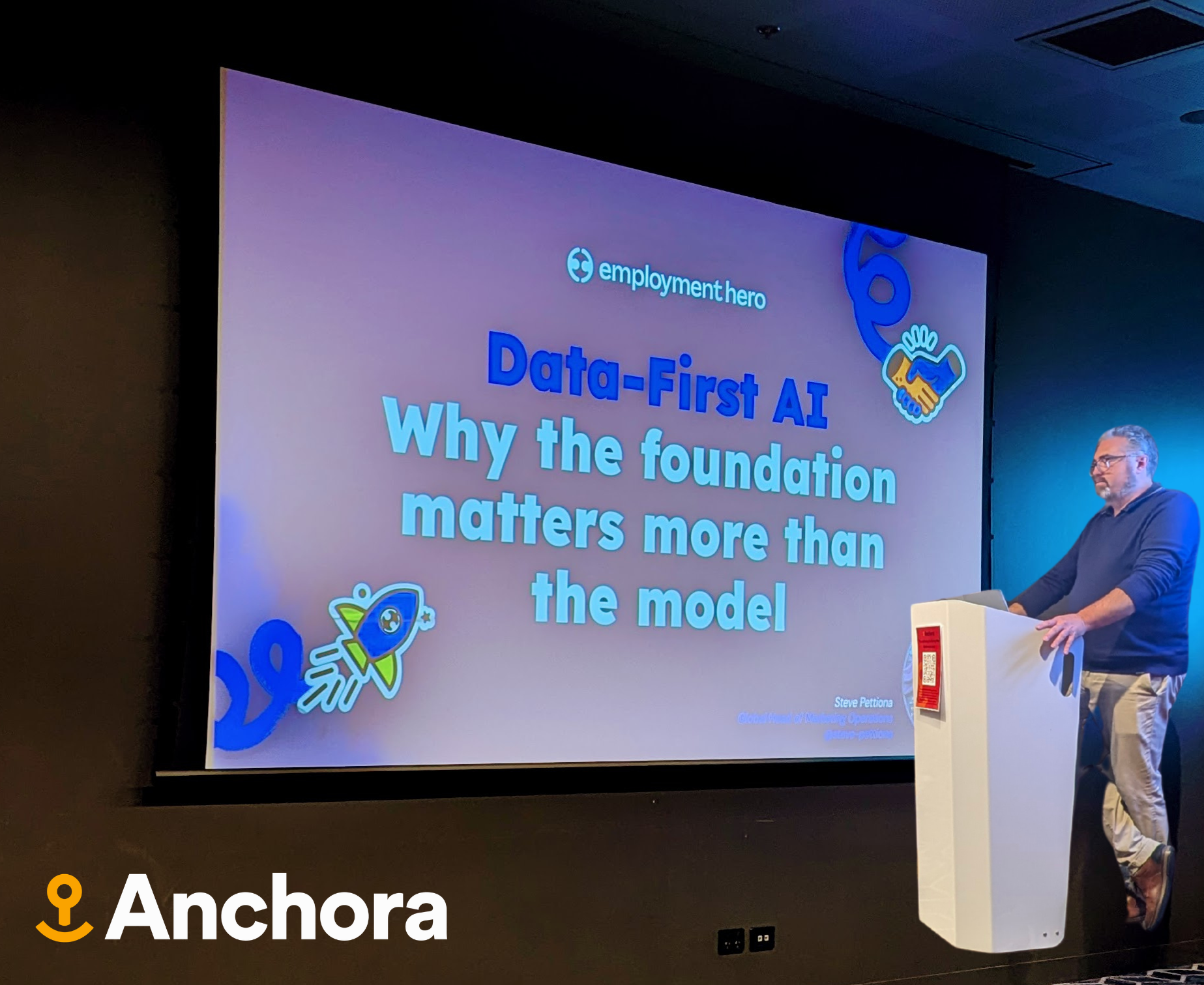
There is A LOT of AI hype! But there’s a difference between the dream, and living the dream. Steve Pettiona, Global Head of Marketing Operations at Employment Hero, is living the dream. This is what a real work day can look like. It’s not a hypothetical, it’s a reality.
7:45am: Before stand-up
Overnight, the spam detecting agent has done its work. It’s scanned the CRM, identified a set of suspicious leads, marked them for deletion, and backed them out of the sales queues.
“We used to get complaints all the time about spam leads taking up time, having to reverse them out. Now it’s handled before the day even begins.”
Half a day of back and forth CRM queries, exports, and manual clean-up done before anyone opens their laptop.
9:30am: reCAPTCHA goes down
An alert pings into Slack. reCAPTCHA has failed across all four markets. An agent picks up the investigation, loads the right skills, and raises a Jira ticket. It saves its plan of action, loads the tools it needs, and runs a detailed analysis, connecting into the data warehouse and any other systems it needs to reach. It comes back with a recommended suite of next steps and writes a full incident communication in the go-to-market Slack channel and captures it all in the MarOps manager’s tone of voice.
“We’ve got skills that emulate the way you communicate. The phraseology, even the emoji use. All personalised.”
Half a day of stress alleviated. The team’s job is now to fix a known issue, not diagnose an unknown one.
10:15am: A data anomaly
Lead volumes are down in one market. The orchestrator spins up an investigation agent, which loads the skills and tools it needs and starts pulling together context from everywhere it can find, including Slack, Confluence, GitHub, and logs. It runs a deep analysis in the warehouse, connecting via a text-to-SQL MCP, and executes a detailed diagnostic. Findings are documented and published to a Slack canvas, the canvas is attached to the GTM channel and a Jira ticket is raised for remediation.
“The best bit though is that it even produces the AI prompt in the ticket for the next agent to pick up to fix the issue. So it’s producing something for the next agent to feed itself and go and fix the issue. Very considerate.”
12:00pm: Dashboards
The web SEO and performance marketing teams have handed the analytics lead their dream dashboard requirements in a ten-page brief. It gets fed into Claude, which produces a compelling style guide, all on brand. The style guide and the brief are attached to a Lightdash conversational interface, which is connected to the semantic layer. That means the agent understands the full context of the request, where to find the data, how to model it, how to present it in charts.
The first draft is 90% of the way there. A few refinement suggestions from the analytics lead, and it’s done. Every dashboard is documented. An agent drafts a Slack notification to the marketing teams, written in the lead’s own communication style.
“Three to six months of Tableau work now reduced to an afternoon, with time for an afternoon break, often while the agent is still working through the problem.”
3:00pm: Eighty landing pages
The MarOps manager needs to change 80 landing pages. The landing page editor skill loads up, along with all the MCPs it needs to make changes across the web and marketing automation platforms. The agent runs the mass change, validates the deployment, updates the Jira ticket, and lets the team know the work is complete.
“No mind-numbing, repetitive, manual work. Say goodbye to multi-day exercises prone to human error. Now it’s a single agent, performed within ten minutes.”
4:45pm: the stuff that stops you getting home on time
“Damn it, I’ve forgotten I’m running a workshop with the CRO team tomorrow. Haven’t done anything on it. I’ve been too busy coding up tools and skills and agents.”
The expert service designer skill loads. It’s already been researched in Gemini, in a notebook and best practices pulled from across the web, prompts generated to build the skill, and the whole thing loaded into Claude. A best practice workshop is designed, and a Miro board is created via MCP. The invite is sent, connected to Google Calendar, with the full agenda and pre-reading attached.
Fifteen minutes.
Time to go home to the kids.
This isn’t a hypothetical scenario.
Every one of those examples is real. Every one is a working day at Employment Hero. And in a recent presentation, Steve Petiona, Global Head of Marketing Operations at Employment Hero, was blunt about the point:
“This isn’t about doing the same job faster. It’s a different way of working entirely.”
His broader message was more sobering: most organisations trying to replicate this will fail. Not because the technology doesn’t work, it clearly does, but because they’ll try to skip the parts that actually make it possible.
Why most AI investments aren’t yielding returns
Petiona’s diagnosis for the gap between AI spending and actual business growth is uncomfortable, but familiar to anyone who has been paying attention.
Most organisations, he argues, are trying to bolt AI onto foundations that don’t exist yet. The result is what he calls floating AI spend. Investment that accrues cost immediately without proportional value. Underneath sits the same problems he says have been on every strategic slide deck for a decade: siloed data, quality issues, reactive reporting, and teams stretched too thin to make sense of it.
His challenge to the room:
“Why haven’t we solved this yet?”
The answer, he suggests, is that organisations keep trying to skip the hard part.
“You can’t bolt AI onto chaos.”
The framework that makes it possible
Pettiona’s framework is what he calls the AI ladder: seven rungs that must be climbed in order.
- Warehouse. A critical mass of your data in one place.
- Models. Raw data structured around consistent business entities.
- Semantic layer. Business meaning, context, and relationships encoded so that the same question always returns the same answer.
- Natural language interface. Democratised access with non-technical teams querying data conversationally.
- Skills. Reusable, documented instructions that capture how your best people perform specific tasks.
- Tools and agents. Agents connected to real business systems through protocols like MCP.
- Orchestration. Multiple agents coordinating on complex, multi-step work.
“It’s a ladder because every rung is important. You cannot skip a step.”
The rung most enterprises underinvest in, in Pettiona’s experience, is the semantic layer. Without it, he argues, “you can ask the same question exactly the same way and get two completely different answers.” Every downstream agent must guess what “active customer” or “conversion” or “revenue” means, and every guess consumes tokens, erodes trust, and multiplies the risk of silent errors.
The trap most leaders fall into, he says, is assuming a smart enough model can compensate for missing foundations. It can’t.
“Raw data isn’t trusted, but it is the prerequisite.”
Pettiona’s framework resonates strongly with what Anchora sees when working with clients (often coming in after the fact to clean up the mess). Most of the AI initiatives we’re asked to review haven’t failed because the technology didn’t work. They’ve failed because there was no coherent foundation for the technology to work on.
In our experience, the semantic layer is where enterprises most consistently underinvest, and where the compounding cost of that decision is highest. When the definitions of core business terms aren’t explicit, every downstream agent has to make its own decision about what they mean. Two agents referencing the same data can produce two different truths, both confidently, both feeding your business. The failure isn’t loud. That’s what makes it dangerous.
We’d add one point to Pettiona’s framework: the ladder isn’t purely technical. Each rung has an organisational analogue. A warehouse without a clear owner drifts. A semantic layer without a business sponsor gets ignored. A skill without a domain expert to validate it becomes a liability.
That’s why we usually recommend clients approach the ladder as a joint programme across data, engineering, and the business function that owns the outcome, not as an infrastructure project.
What “mature” looks like
The most striking thing about Pettiona’s day-in-the-life story isn’t any individual example. It’s what those examples add up to.
When the reCAPTCHA agent diagnoses an outage, it doesn’t just fix the problem in front of it. It writes the AI prompt for the next agent to consume. When a data anomaly is detected, the investigation agent doesn’t just publish findings, it attaches those findings to the ticket that another agent will pick up to remediate. The agents are producing work for each other.
Petiona describes it plainly:
“It is basically agents updating agents.”
He mentioned this in response to a common concern: business definitions change. In hyper-growth companies, they change constantly. But at Employment Hero, when a definition change is captured, say, from a meeting transcript, an agent identifies the delta, analyses the impact on downstream metrics, and updates the semantic layer, the models, and the documentation accordingly.
The system maintains itself. That’s what a fully climbed ladder makes possible.
It’s also what makes the productivity gains Pettiona describes compound over time, rather than plateau. Three months of Tableau work reduced to an afternoon isn’t the ceiling. It’s the starting point.
Questions leaders should be asking
If Pettiona’s argument holds, a handful of diagnostic questions are worth putting to your executive team:
- Where is our data today? Do we have a critical mass in one place, or are we still stitching together sources every time we need to answer a question?
- When we ask the same question twice, do we get the same answer? If not, we don’t have a semantic layer, we have wishful thinking.
- Who owns our business definitions? Marketing? Finance? Nobody? If no one owns them, agents will define them for us.
- What knowledge lives only in people’s heads? That’s not resilience. That’s a single point of failure.
- If our best analyst left tomorrow, what would we lose? Anything that can be answered is a candidate for a skill.
Are you reading this thinking, I want that!
Pettiona ended his presentation with a warning worth repeating. In a world where competitive moats are shrinking, the organisations treating this as optional will discover their competitors did not.
“You can’t start fast enough.”
We’d put it slightly differently. You don’t need to move fast. You need to start with the right rung. Because the ladder rewards patience and punishes shortcuts. So where do you start? You work out which rung you’re on.
That’s where Anchora comes in. We meet with your key people, get them in a room, and ask the right questions. If you want to get everyone on the same page working towards one common AI dream, then we can help you roadmap how you’re going to get to live the dream.