
Your Forms Are Your Worst Customer Experience. AI Can Fix That.
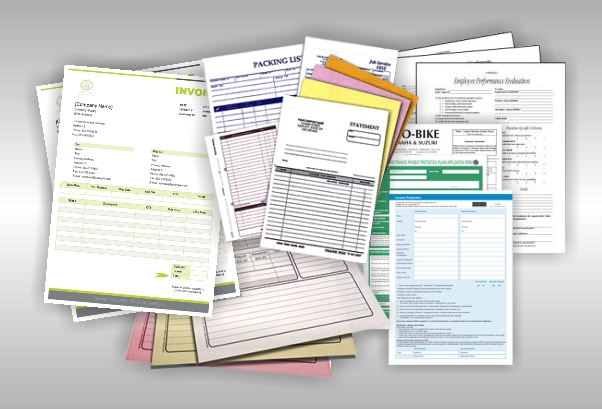
Every organisation in financial services, insurance, and accounting has them. Long, multi-step forms that customers are forced to complete before they can get a quote, open an account, submit a claim, lodge a return, or start onboarding.
These forms were designed for internal process compliance. Not for the person filling them in.
And the data tells the story. Industry-wide, form abandonment rates in financial services sit between 40% to 80%. Not because customers don’t want the product but because the experience of getting it is painful enough to make them leave.
Think about who’s actually filling in these forms.
It’s a parent who finally sat down to sort out their car insurance renewal after the kids went to bed. They get to question 14, hits a field asking them to choose between “agreed value” and “market value,” isn’t sure of the difference, tells themself they’ll come back to it tomorrow, and never does.
It’s 25-year-old Jesse halfway through a renters insurance quote on their phone during a lunch break. They’ve got eight fields left when a group chat lights up, they swipe away, and your form becomes one of 37 open tabs they’ll never return to.
It’s a small business owner at 9pm after a 10-hour day, staring at an onboarding questionnaire asking for documents they don’t have on their phone, in a format they don’t understand, with no way to save and come back later.
None of these people decided they didn’t want your product. They just ran out of time, patience, mental capacity or simply got distracted and your form didn’t meet them where they were.
That’s not a customer problem. That’s a design problem.
Why traditional fixes don’t work
Most organisations respond to high abandonment in one of three ways:
- Shorten the form. Cut fields, reduce steps. But in regulated industries, you can’t just remove questions. Compliance, underwriting, and risk assessment require specific data.
- Add help text and tooltips. More content on an already overwhelming page. It helps the 10% who read it and gets ignored by everyone else.
- Put a human behind it. Staff a call centre to walk people through the form over the phone. This works, but it doesn’t scale and it turns a digital interaction into a 20-minute phone call that costs you $15–30 per session.
None of these address the root cause: the form itself is the wrong interface for the job.
What a conversational AI approach actually looks like
We recently partnered with Thomas Insurance Services, a mid-sized Australian insurance provider, to tackle exactly this problem. Their quote and renewal forms were manual, paper-heavy, and generating high abandonment, long wait times, and a constant stream of support calls from confused customers.
Instead of redesigning the form, we replaced it entirely.
We built a conversational AI assistant. A dialogue-driven interface that guides customers through the quoting and renewal process naturally, the way a good broker would. Ask a question, get an answer, move to the next one.
It works like a two way chat, where the user can also ask questions about definitions of terms or for more details on a particualr product. Hit a roadblock? The AI can reframe the question, break it down into smaller questions or offer more context. Just like a real person, without the cost of a real person. Engaging, interactive, accurate and time efficient. It’s not just a form, it’s a collaborative problem solver.
Under the hood, the solution does serious work:
- Natural language understanding via Azure AI Foundry so the assistant interprets what the customer actually means, not just what they type.
- Real-time integration with core policy systems via secure APIs so eligibility checks, data validation, and pricing happen during the conversation, not after.
- Complex logic, simplified such as insurance underwriting rules translated into clear, guided questions. The customer never sees the complexity.
- Real-time validation so that errors and missing information are caught in context, during the conversation, not flagged in a rejection email three days later.
- Compliance and PII security baked in, not bolted on. Secure storage patterns, PII handling frameworks, and compliance protocols embedded throughout the architecture.
The customer just has a conversation. The system handles everything else.
The results speak for themselves
The impact at Thomas Insurance was immediate and measurable:
| Metric | Result |
|---|---|
| Form abandonment | 60% drop |
| Completion speed | 3x faster |
| Support calls | 40% reduction |
| Member satisfaction | 90% score |
| Quote-to-bind time | Measurably improved |
But the most telling outcome wasn’t a number. It was a behavioural shift. Customers who previously avoided the forms or called the support line to be walked through them now complete the process independently and willingly.
The conversational approach removed the psychological barrier of “filling out insurance paperwork.” Customers now engage willingly instead of reluctantly.
That’s not an incremental improvement. That’s a fundamentally different customer relationship.
This isn’t an insurance-only problem
If you’re reading this and thinking “that sounds exactly like our onboarding process” or “our claims form has the same abandonment issue”, you’re right! This pattern is everywhere:
Insurance:
- Quote and renewal forms
- Claims submission
- Policy amendments and mid-term adjustments
- Broker fact-finds
Financial Services:
- Account opening and KYC onboarding
- Loan and mortgage applications
- Investment suitability assessments
- Hardship and dispute forms
Accounting:
- Client onboarding questionnaires
- Tax return data collection
- BAS and compliance lodgement preparation
- Annual review information gathering
In every one of these scenarios, the underlying pattern is the same: you need structured data from a customer, the process is governed by compliance rules, and the current interface is creating friction, abandonment, and operational cost.
A conversational AI approach works in all of them. The logic changes. The compliance rules change. The experience pattern stays the same: guide the customer through a natural dialogue, validate in real time, integrate to your systems, and handle complexity behind the scenes.
Imagine what that could do for a customer who just watched their house burn down or for someone in financial hardship trying to find a way out. Or for a person who’s just lost a loved one and is being asked to fill in a 40-field claims form on the worst day of their life or a 19-year-old trying to sort out insurance for the first time with no idea where to start.
Sometimes, an AI-assisted form is as simple as helping someone tick something off their to-do list a little faster or preventing a bad day from getting worse. But in some cases, it can be fundamentally life changing, and your customers will remember you for that.
What it takes to get this right
This isn’t about plugging ChatGPT into your website and hoping for the best. A production-grade conversational AI solution in a regulated industry requires:
- Deep understanding of the customer journey. Not the process map, the actual experience. Where do people hesitate? Where do they drop off? Where do they call for help?
- Integration architecture. The AI needs to talk to your core systems in real time. Policy platforms, CRMs, document management, compliance engines. Secure API connections, not screen scraping.
- Compliance by design. PII handling, data residency, audit trails, and regulatory requirements need to be embedded in the architecture from day one.
- Domain logic translation. Someone has to take your complex business rules and turn them into simple, guided conversation flows. This is where most generic AI implementations fall over.
- Continuous validation. Real-time checks during the conversation, not batch processing after submission. This is what eliminates the back-and-forth that kills customer satisfaction.
The technology isn’t the hard part. Understanding the customer journey and knowing where AI can genuinely remove friction is where the real work happens.
Where to start
If your organisation is still relying on static forms for high-value customer interactions such as quoting, onboarding, claims, and applications, you’re leaving revenue on the table and spending money on support calls that shouldn’t need to happen.
The pattern is proven. The technology is mature. And the results are measurable from day one.
Read the Thomas Insurance Case Study here.
If you want to explore what a conversational AI approach could look like for your organisation, book a discovery call with us by emailing hello@anchora.com.au